



The Slaughters
At Your Leisure Volume 6
The Slaughters sit on the peaceful banks of the winding River Eye, just 2 miles north of Bourton-on-the-Water and 3.5 miles southwest of Stow-on-the-Wold. Devoid of overhead wires and intrusive street furniture, these twin villages are a masterclass in unspoiled elegance.
By Charlotte Ellis.
10 Things we LOVE about The Slaughters
1. The Twin Beauties: Lower and Upper Slaughter
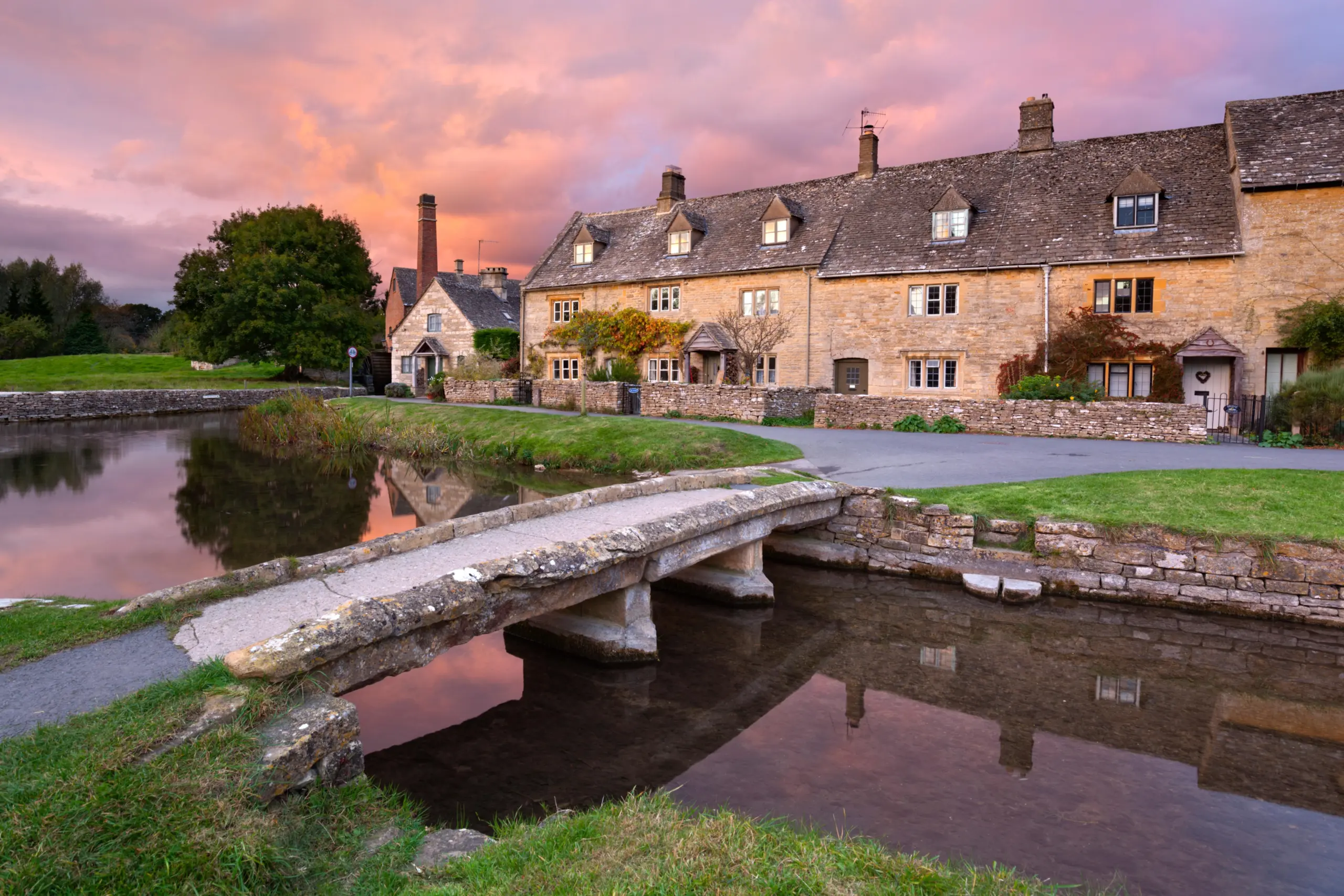
Nestled just a tranquil, mile-long stroll apart along the banks of the River Eye are the twin villages of Lower and Upper Slaughter. Lower Slaughter captivates with its timeless romance, anchored by Copsehill Road—celebrated among Britain’s most enchanting thoroughfares—and the grace of its historic 19th-century watermill.
Just upstream, Upper Slaughter offers a more secluded sanctuary. Preserving an air of untouched, aristocratic serenity, this hushed hamlet remains blissfully frozen in time, defined by the historic charm of ‘The Square,’ the sacred stillness of St Peter’s Church, and an architectural purity untouched by new construction since 1906.
2. The Gentle River Eye
Meandering gracefully through the heart of both villages, the crystal-clear waters of the River Eye serve as the luminous lifeblood of the Slaughters. Framed by weeping willows and immaculate lawns, its shallow streams create a pristine sanctuary for local wildlife, casting postcard-perfect reflections across its surface.
3. The Historic Lower Slaughter Mill
A cornerstone of the lower village, the historic 19th-century mill stands as a majestic testament to the region’s storied industrial heritage. While its foundations trace back to the Domesday Book of 1086, the structure flourished as a commercial flour mill until 1958. Once a charming destination for discerning visitors to enjoy its artisanal shop and coffee kiosk, the mill is currently closed for transformation. Stay tuned for news of its next chapter.
4. Iconic Cotswold Architecture
The Slaughters are a masterclass in vernacular architecture, built almost entirely from locally quarried Jurassic limestone. With their steeply pitched slate and stone-tiled roofs, mullioned windows, and striking symmetry, these buildings look as though they have grown organically out of the ground.
5. Picturesque Footbridges and Fords
Crossing the River Eye is a joy, thanks to a series of low stone footbridges that arch gracefully over the water. For drivers and adventurous walkers alike, the traditional shallow river fords offer a charmingly rustic way to cross from one side of the village to the other.
6. Lords of the Manor Luxury
For those looking to indulge, Upper Slaughter plays host to the magnificent Lords of the Manor a 17th-century former rectory turned luxury country house hotel. The 25 bedrooms individually decorated bedrooms and award-winning restaurants are set within acres of private parkland; a haven of refined hospitality and quintessential English elegance.
- The Dining Experience: Chef Charles Smith runs two distinct destinations at the hotel—the fine-dining Atrium and the more informal Dining Room.
- The Tradition: Treat yourself to a classic afternoon tea served in the pristine gardens when the weather is warm.
7. Timeless Rural Footpaths
As key waypoints on regional routes like the Warden’s Way, the paths leading in and out of the Slaughters are a walker’s dream.
- The Mile Path: A flat, beautiful 25-minute walking path connects the two villages directly alongside the trickling River Eye.
- Wider Rambles: To top up your step count, head toward Bourton-on-the-Water, just 40 minutes away on foot across open pasturelands and quiet country lanes.
8. Architectural Heritage & The Lutyens Touch
Upper Slaughter boasts a unique architectural claim to fame, being one of the rare ‘Thankful Villages’ that lost no men in World War I, and it features subtle design enhancements by the legendary architect Sir Edwin Lutyens.
Lutyens expert eye helped preserve the village’s harmonious, unified aesthetic. Trace further back through history, and you’ll find the medieval motte of a long-gone castle, the Saxon-origins of St Peter’s Church, and a manor mentioned in the Domesday Book.
9. A Cinematic Masterpiece
With its storybook aesthetic, the Slaughters have long been a darling of the silver screen. Their unspoiled beauty has served as a backdrop for numerous period dramas, most notably captured as a filming location for the 2020 adaptation of Emma, starring Anya Taylor-Joy, Mia Goth, Callum Turner, and Josh O’Connor.
10. Peace & Seclusion
Despite their popularity, the Slaughters retain a deeply protective cloak of quiet. As evening falls and day-trippers depart, the villages settle into a hush, offering a rare, starry-skied sanctuary where you can truly step away from the noise of the modern world.
TIP: Visit as early in the morning as you can muster to experience utter serenity.
Insider Address Book
- To Stay & Sleep: The Slaughters Country Inn in Lower Slaughter offers a quintessential country pub stay, complete with roaring fires, great beer, and cosy rooms. Their ‘sister’ hotel The Slaughters Manor House, a glamorous 17th Century Manor with 19 rooms, is also a short stroll away. For ultimate luxury, book a room at Lords of the Manor in Upper Slaughter.
- To Explore: Wander the peaceful graveyard and gardens of St Mary’s Church in Lower Slaughter before taking the scenic route up via Copsehill Road— ‘Britain’s most romantic street’.